
Chichester Community Development Trust

Case study
The Chapel, Graylingwell Park (Credit: Chichester Community Development Trust)
Chichester Community Development Trust (CCDT) was founded in 2009 to ensure local interests were met when a partnership of developers, Homes England and housing associations bought a former local ‘asylum’.
Fast forward to 2025 and CCDT has activated more than a dozen new, disused and under-used spaces for community needs: community gardens, a wellbeing centre, learning spaces, sports clubs, art studios and bike repair shops.
Today the charity is owned and led by local residents and organisations with a staff team and Board of Trustees.
It’s dedicated to safeguarding vital buildings and land for community use in perpetuity, while unlocking the opportunity of new builds to deliver community projects.
A portfolio of community assets
In 2012, CCDT (made up of a trustee board and one part-time employee) began to develop its own community spaces and explore opportunities with new builds. Initially the goal was to take on 3 modest spaces.
These included a community hall in Roussilon Park in 2014, followed by a Lodge and Water Tower in Graylingwell Park which were transferred as freeholds to CCDT as part of a Section 106 agreement.
To begin, they secured a £17,000 investment from Linden Homes as a Section 106 contribution.
Clare de Bathe, who joined the Trust as the first employee in 2012, recalls:
“These first three assets were a catalyst – and after that we had the wind in our sails.
We negotiated the transfer of more buildings that the local authority was taking off its books, and with private developers across the district.”
Today, CCDT owns 13 assets on freeholds and 2 on a leasehold, meaning long-term stewardship for the community. They’ve spent more than ten years working with Chichester District Council, developers, housing associations and funders, to enable community co-design of new facilities, as well as transforming vacant buildings.
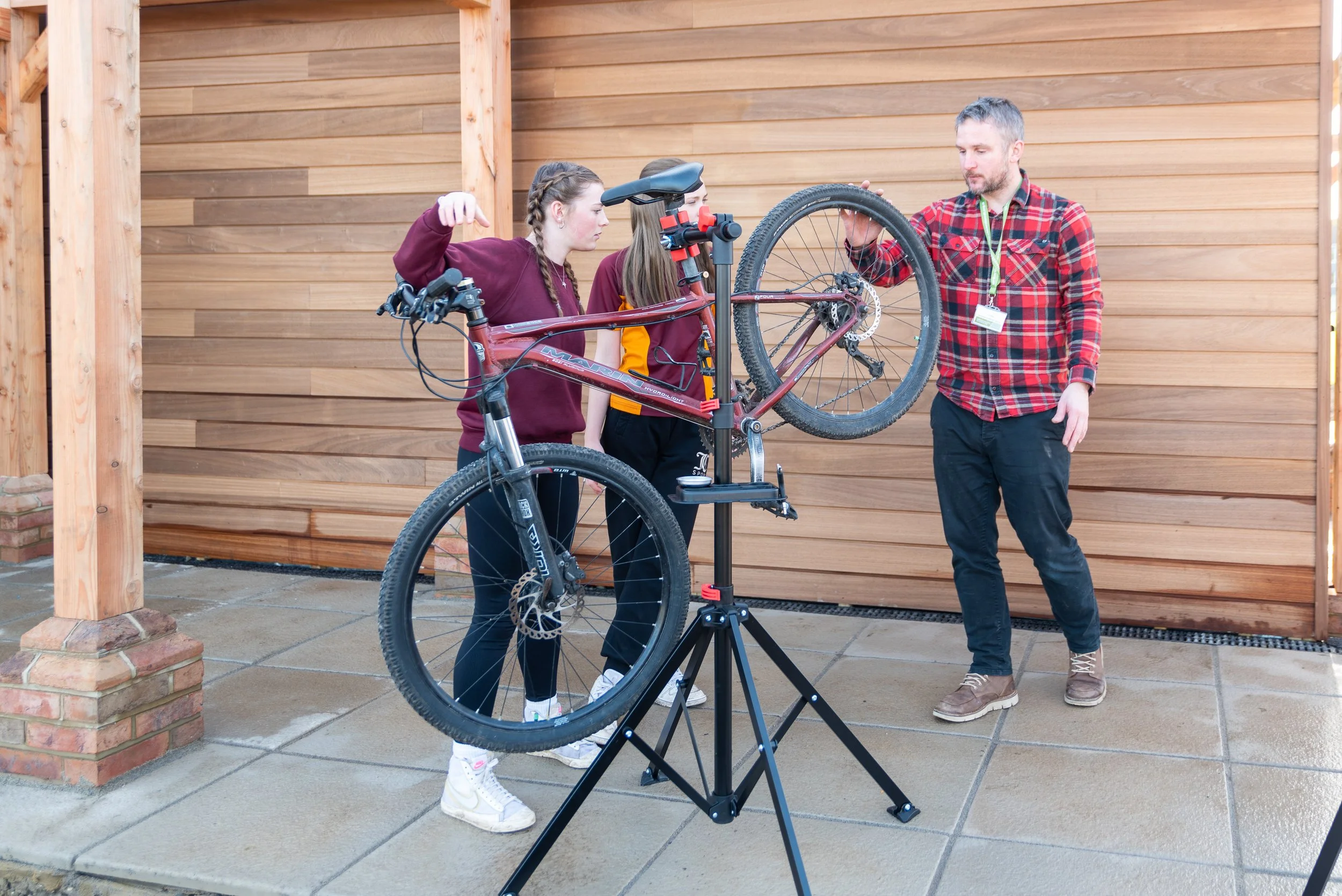
Chichester Bike Project (Credit: Chichester Community Development Trust)

The Community Garden, Keepers Green (Credit: Chichester Community Development Trust)
Community-driven new build
CCDT works directly with private developers or with Homes England registered housing associations, typically as Section 106 partners.
To ensure the Section 106 isn’t just a tick-box exercise, CCDT is flipping the process with new build developments. They’re embedding community needs from the start, instead of developers following outdated templates in their obligations to delivery community facilities, which may not be practical or what local people need.
“Typically with new builds, developers do a bare minimum build, before even knowing who’s going to own and manage them.
They’ll have ideas that haven’t been created with the community. For example, one developer wanted to build a cricket pavilion with afternoon tea facilities.
We come in early in the process and ask, “What if you give us the building and we put an affordable nursery school in? Or a youth club, or health and wellbeing centre?”
— Clare de Bathe, advisor to CCDT and CEO from 2012-2025
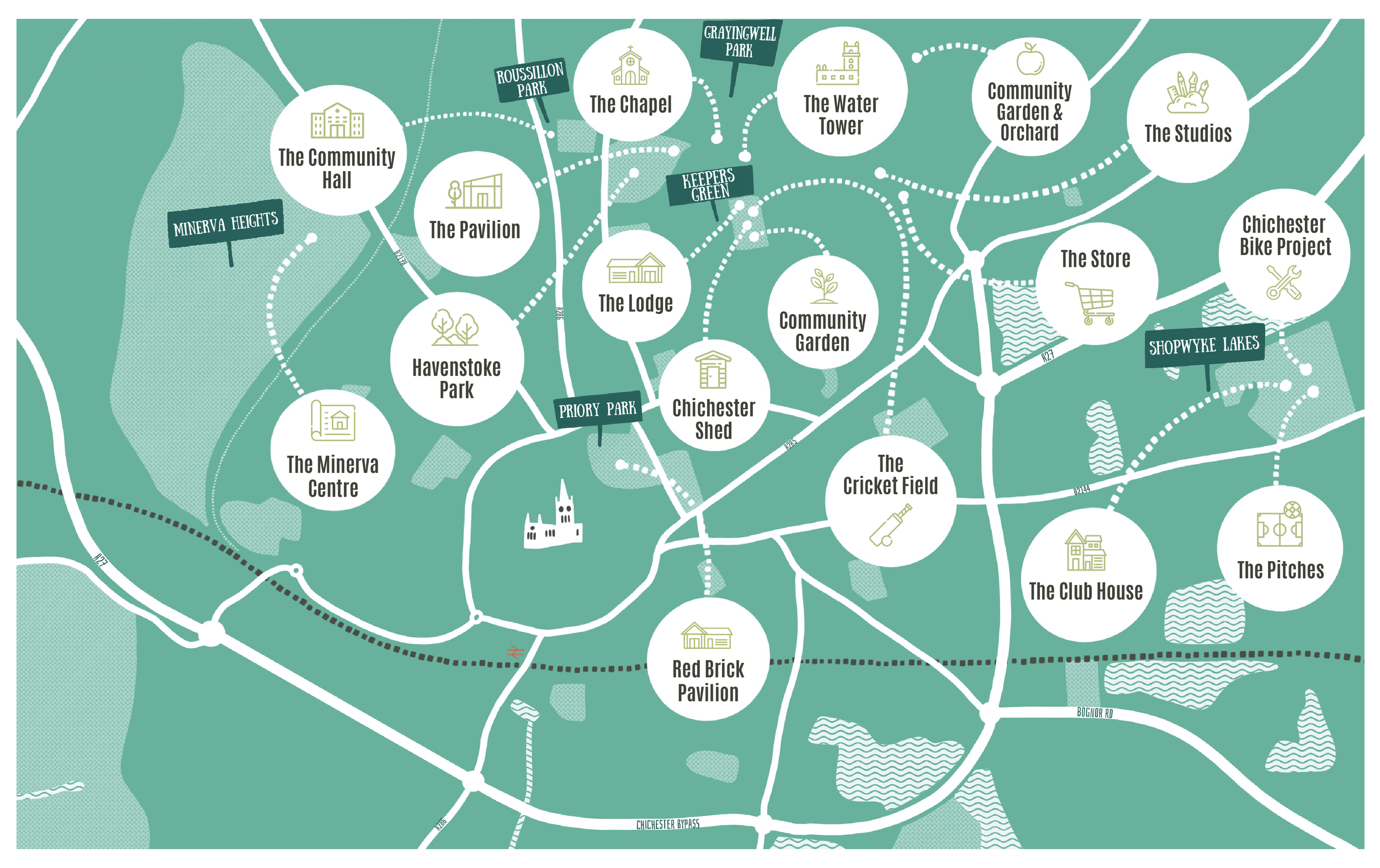
Credit: Chichester Community Development Trust
All the housing developments CCDT works with include at least 40% social and affordable homes. In one 1500-home site, it’s 100%. CCDT collaborates with residents to identify how to activate redundant space in these developments for what they might be struggling with (for example, affordable healthy food facilities, such as the Community Fridge).
Financing community assets
Grants have been the main source of funding for capital works on CCDT’s buildings. For instance, they secured £500,000 from Chichester District Council, Sport England and trusts and foundations to build a health and wellbeing centre in a former sales and marketing suite, and £400,000 from Youth Investment Fund to transform a disused area of land into The Chichester Shed, a thriving youth hub.
Often this investment has been raised as match-funding against a pot of money secured from the developer gifting the space to CCDT.
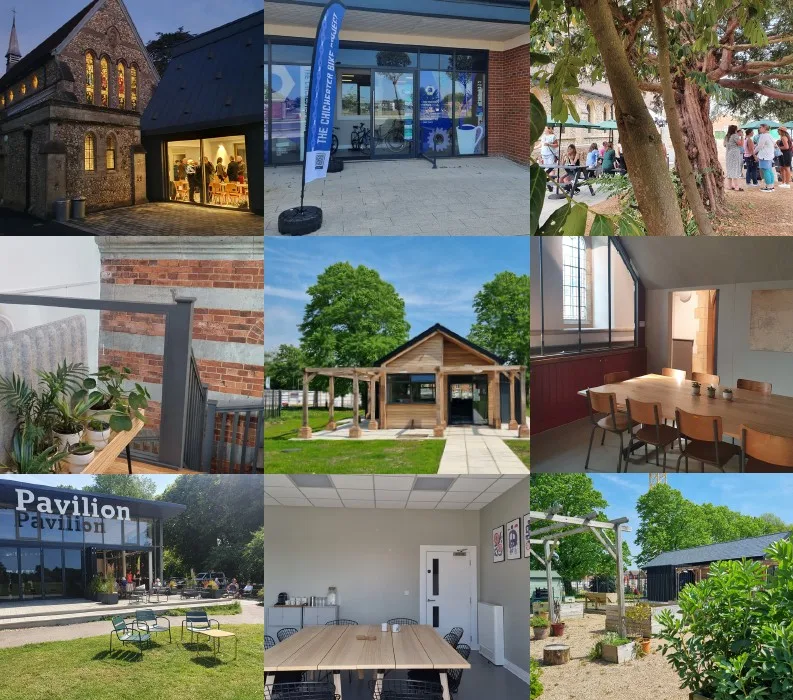
Inspirational spaces for a vibrant community (Credit: Chichester Community Development Trust)
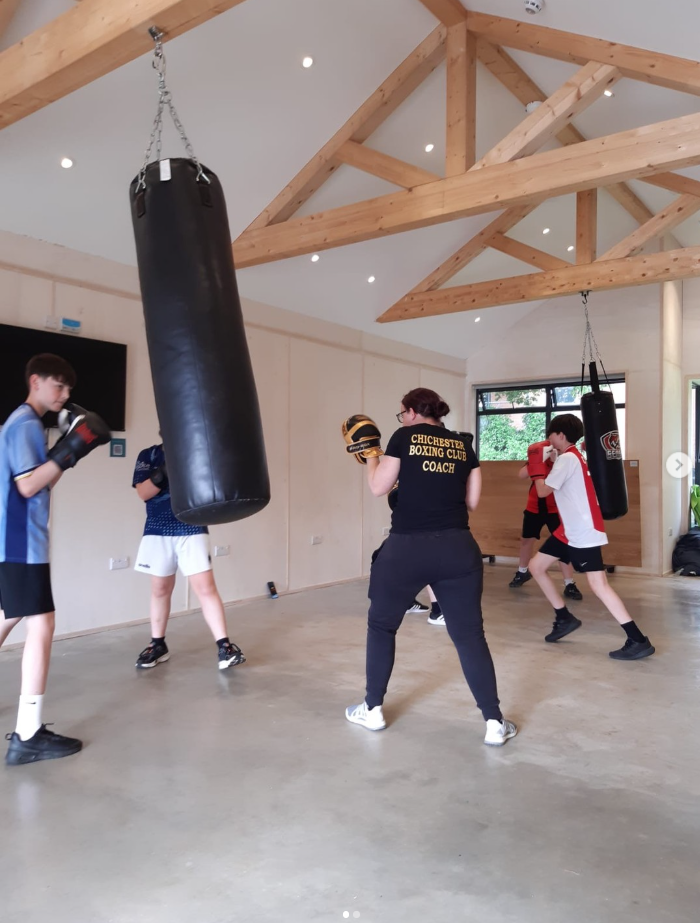
Boxing session at The Shed (Credit: Chichester Community Development Trust)
In addition, CCDT generates income from rents, which is then reinvested across the portfolio of community assets, including green spaces, parks and pitches.
The Trust manages some of the buildings itself, but rents out others on affordable rates to local socially-trading organisations.
For example, the Little Learners Preschool, aimed at low-income families, previously relied on pack-up-and-play facilities. Now, thanks to a long lease, it’s a thriving and growing limited company. They share their space with the local cricket team (the building was originally designed as a sports changing facility as part of a Section 106 requirement for a new cricket pitch).
Further South, the Chichester Bike Project is a Community Benefit Society (CBS) set up by CCDT, where residents come for cycle training, repair and re-homing. It’s in a wider new retail space, which was also part of a Section 106 agreement.
“We’re building not just an asset portfolio but a powerful network of community organisations who are connected in mutual support, who are growing in fantastic ways, and are meeting local social and environmental needs.
I see three main things that have enabled this: a council that trusts community decision-making; secure long leases or ownership; and community at the heart of shaping the Trust and its spaces.
— Clare de Bathe, advisor to CCDT and CEO from 2012-2025
What’s next
As well as talks with another new-build housing development for a large community space, CCDT has recently secured a £3 million grant from The Community Ownership Fund and The National Lottery Heritage Fund to transform a plot of derelict stables into 10,000 square feet of makerspaces, on a freehold.
Meanwhile, they’re taking on a 40-year lease on a derelict city centre building for £1 (owned by Chichester District Council), to bring it to life as a sustainability and repair centre – and are busy fundraising and securing planning permission.
Read more details about CCDT’s journey to transform buildings — from the collaborations, planning processes, fundraising and negotiations to the building works, community impact and lessons learned.

Transform your town centre
Want to make this happen on your high street? Get in touch.
We help councils, community leaders and asset owners create Local Property Partnerships that unlock buildings for amazing ideas.