
Governance 101 for Community Assets
Last updated: May 2026
Developed in partnership with Footwork. With thanks to input from experts Bob Thust (PG Collective / Hastings Commons) and Julian Lomas (Almond Tree Consulting) and insights from the pilot Local Property Partnerships (funded by the National Lottery Community Fund).
💡 These tips and examples are to help you start navigating the world of governance. Seek tailored advice before making legally-binding decisions (see ‘Getting help’).
If you’re reading this, you’re probably somewhere on the journey of taking on one or more buildings for long-term community benefit.
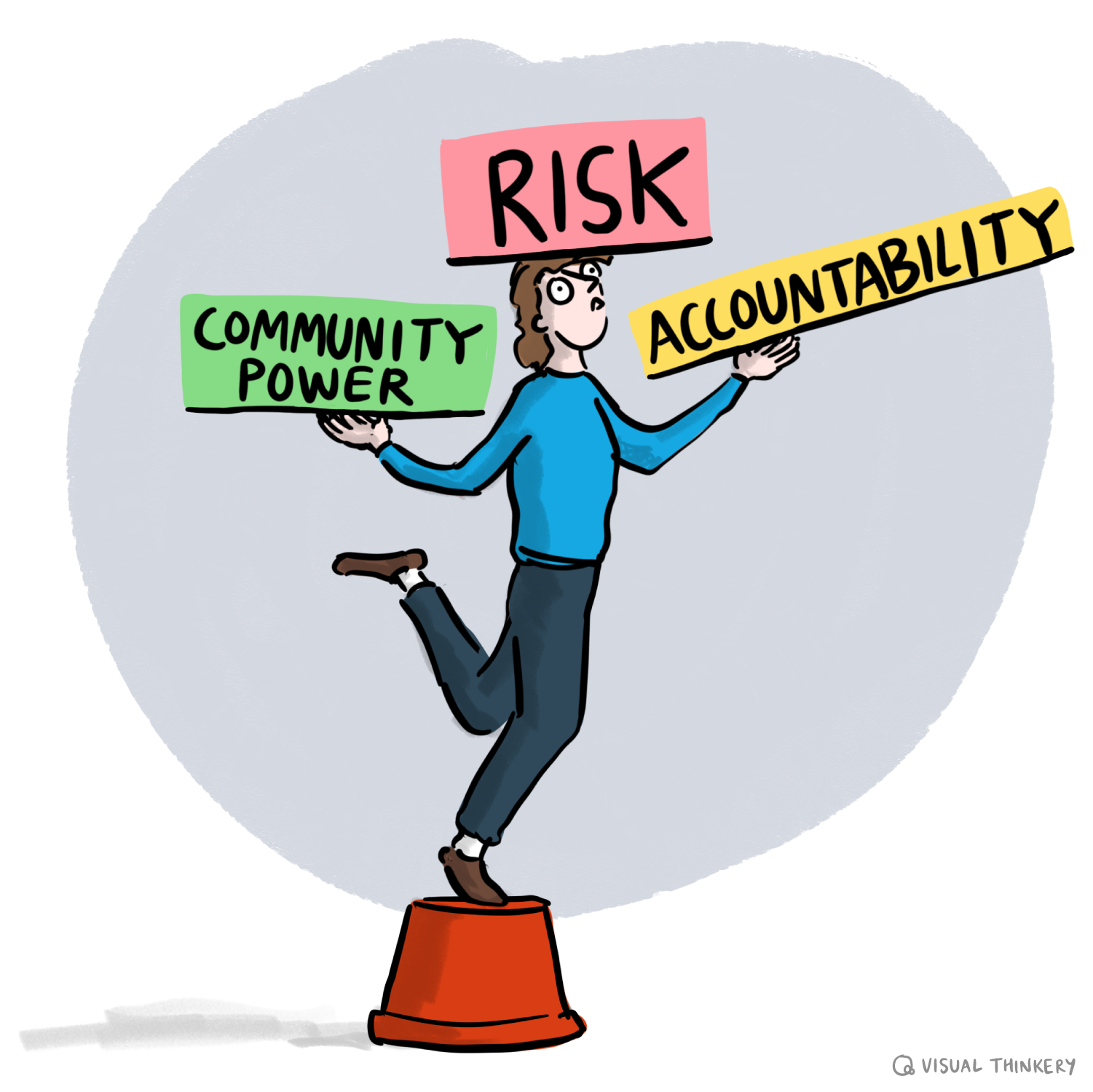
You might be facing market or funder pressure to become a formal organisation quickly. You might be trying to work out how to balance risk, accountability and community power.
There’s no one-size-fits-all. Most groups end up designing their governance over time, not in a single moment. What follows is a starter guide to help you make the next good decision, knowing this is a wiggly, long-term journey.
Before we dive in, there are 3 things to keep in mind:
1. Why do community asset developers (CADs) need a legal structure?
There needs to be a vehicle that can hold the asset, sign the lease, raise investment, take the risk, contract with partners, make decisions and be accountable. This needs to be an incorporated entity. An unincorporated entity (like a Trust or Unincorporated Association) has no legal ‘personality’ of its own; Trustees have to personally enter into contracts and hold property, meaning significant personal liabilities.
You might already have a company or charity that can buy or lease buildings. To sense-check the right approach, read on…
2. Choosing a legal form is rarely straightforward. It’s also deeply dependent on context.
For community organisations, the governance process is often complex, costly and time-consuming. This guide aims to make it easier by signposting key decisions to make and options available. Alongside this, we strongly recommend seeking expert advice from the start, to help ensure your decisions suit your local context, group and aims. This may involve relying on pro bono input or dedicated funding (see more on this here).
3. The legal form isn’t everything
Governance is more than a necessary evil or a set of documents that keep funders and regulators happy. As Bob Thust put it in a recent Footwork technical huddle with community innovators on the People and Place 2025 programme:
“Governance is exciting because it goes to the heart of the kind of world we’re trying to build — one that isn’t just the status quo.”
Part 1
The foundations of governance
All illustrations by Visual Thinkery ©
Community asset developers (CADs) need a legal structure to hold a building. But structure alone isn’t enough.
Governance is a broader ecosystem: the relationships, roles, decision-making and accountabilities that make your organisation work. For CADs, these systems matter enormously — especially when the goal isn’t just to save one building, but to steward multiple assets, strengthen local economies and enable neighbourhood-wide transformation for social justice and environmental resilience.
When Bob Thust talks about “governance”, he’s not just referring to the constitution or Board. It’s about:
How decisions get made
How risks and responsibilities are shared
How people and organisations are organised to get things done
In other words, governance lives in:
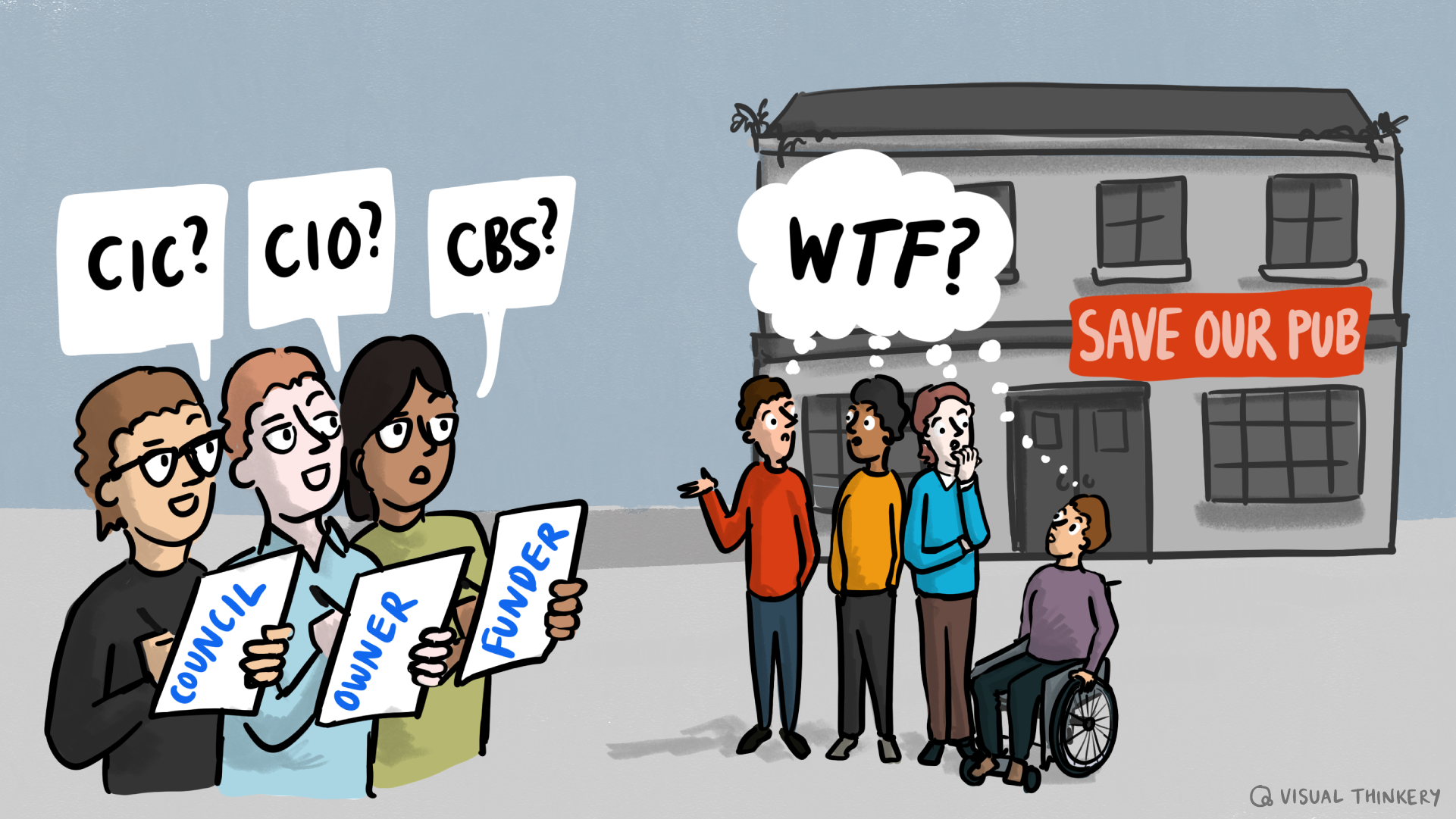
Your formal structures (CIC/CIO/CLT/CBS/charity/CLG etc - jump to ‘Choosing legal forms’)
Your informal practices (who’s actually in the room, how meetings run, how conflict is handled)
Your wider ecosystem (partners, members, residents, funders, asset owners, councils)
Form follows function
Legal forms should grow out of what you’re trying to do, not the other way around. Ensure you’re clear on: What is the work or process that we need this tool for? What are our business models and potential funding options?
Relationships really matter
“Trust and relationships are just as important as securing the building. Without it, community-led initiatives won’t last.”
— Gail Lawler, Big River Bakery (one of the pilot Local Property Partnerships)
Bob Thust emphasises that legal forms are tools — they don’t tell you how things really work. Start with people, roles and relationships, following these two steps:
-
Who are the people and groups who should have a role in how assets are stewarded?
This might already be clear in your groundwork – bringing partners together informally around a dinner table or starting to identify representative local leaders or an existing forum that has led to your community asset idea (see here how the pilot Local Property Partnerships are doing this).
Typical stakeholder groups might include:
Potential occupiers (social enterprises, community groups, networks)
Staff, trustees/directors and volunteers
Anchor partners (councils, buildings trusts, funders, developers, estate agents)
Wider movements (Community Land Trusts, co-op federations etc.)
Residents and local community members
Business Improvement Districts
Not all individuals need to be involved in formalised structures; input and support can take on many forms.
-
Bob Thust recommends Julia Unwin’s 5S model of governance as a handy way to think about what different groups do.
For each stakeholder group, ask:
Strategy – Who helps set direction and big choices?
Stewardship – Who looks after assets, reputation, knowledge for the long term?
Scrutiny – Who holds you to account? Who asks: “Is this working?”
Support – Who backs the team, makes the work possible, helps solve problems?
Stretch – Who challenges you to go further, innovate and stay ambitious?
You can turn this into a simple workshop exercise. You’ll quickly see patterns to reflect on:
Are you relying on your board for everything?
Is the community only being asked to “rubber stamp” decisions, or actually shaping them?
Is anyone stretching you, or only scrutinising?
This is your first draft governance ecosystem, ideally before a single legal acronym appears.
Sometimes you don’t have the luxury of designing this ecosystem first; an acquisition opportunity, lease signing or funding window has forced you to incorporate fast. Even then, a light-touch version of 5S mapping could help you avoid obvious pitfalls (e.g., burdening a brand-new board with unmanageable risk, or creating a CIC that can’t issue community shares).
Well before incorporating, Bedminster Works CIC began as a group of people under the umbrella 'Bedminster Property Partnership' (including local businesses, community organisations, the City Council and asset owners).
They spent time building relationships and bringing different stakeholders together to share needs, challenges, ideas and visions for local buildings. Convening this 'dinner table' in the spirit of trust, bridge-building and dialogue was a key first step before making formal governance decisions.
Power and risk must balance (the ‘Enabler/Burden Check’)
Once you know who’s involved and what roles they have, the next question Bob recommends asking (and coming back to over time) is: “How do we balance power and risk fairly?”
Dark Matter Labs talk about governance in terms of enablers (power, autonomy, ability to act) and burdens (risk, accountability, obligations).
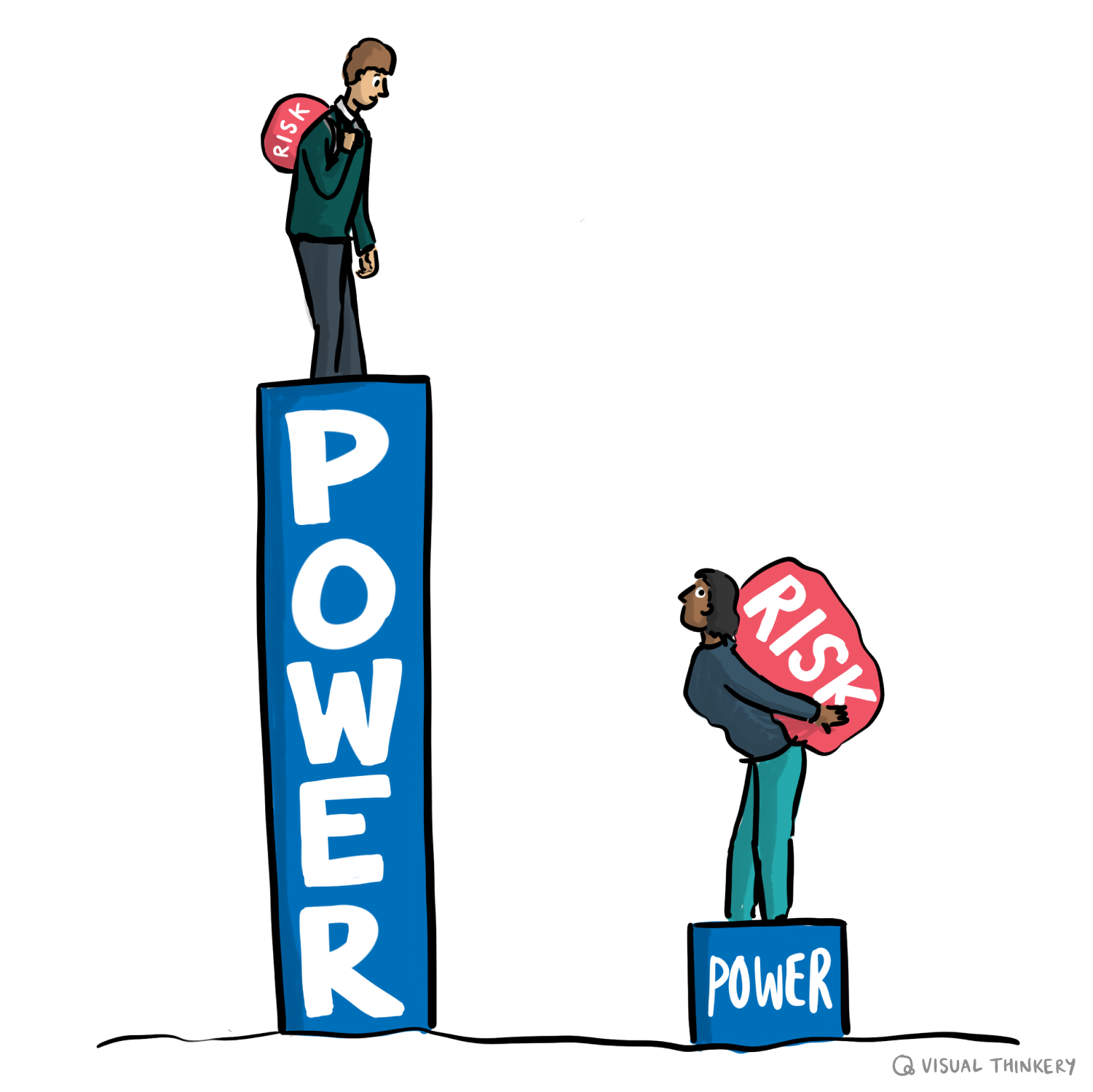
In any decision or structure, try to avoid:
Power without burden: people who have big decision-making power but carry none of the risk or accountability
Burden without power: people who carry risk and consequences but can’t influence decisions
That’s especially relevant in community ownership and membership models. If you ask members to decide everything but they don’t carry the legal or financial risk, you can create unfair pressure on staff and boards. Whereas if boards make all the decisions but never face scrutiny from members, tenants or community stakeholders, you risk losing engagement and buy-in.
→ As a quick test for major decisions, ask: “For this decision, who has power? Who carries risk and accountability? Does that feel fair?”
You might decide, for example:
Members (if you have them) shape strategy and elect the board.
Boards carry legal and financial risk, and so take detailed decisions about leases, staffing and capital commitments.
Staff hold operational autonomy within agreed frameworks, with clear support and scrutiny.
It’s OK if some of this isn’t decided from the get-go, but prioritise reviewing it as your approach evolves.
Part 2
Choosing a legal form for community assets
See what other community asset developers have done and browse the key legal forms and models.
Stories from the field…

-
That meant we could run community shares to buy our first vacant buildings (The Clipper pub and The Millennium), and we have 590 members who have all invested — they each have one vote, whether they invested £50 or £100,000.” — Hannah Sloggett, Nudge, Plymouth
Image credit & copyright: Nudge Community Builders

-
…alternative structures are too slow to establish.
Our area is experiencing significant gentrification pressures – rising costs and real urgency around securing buildings before they are lost to mainstream development.
We need to be able to act quickly.
As a cross-sector coalition, including community organisations and the council, we’re working at pace to design our internal processes, governance structures and approach.” — James Perrott, Bedminster Works (Bristol)

-
developed over time.
Managing risks is so much more important when you’re not just out to save one building, but when you’re trying to use the creative rescue of buildings at scale over time for community development — to ‘darn the fabric’ of a place — physically, economically, socially and environmentally…
There are lots of ways to do this.Our approach with Hastings Commons was to put in place a deliberate ‘risk space’ to protect our community organisation and enable progress.
We set up Neighbourhood Ventures, which protected our Community Land Trust (CLT) by sharing the most risky decisions with two mission-led enterprises (Jericho Road Solutions and Meanwhile Space CIC).
It's structured so that the CLT owns one-third of the shares. This way, the CLT has strong influence over the venture, but even if the venture was to fail, the CLT is safe; its primary assets remain intact.” — Dr Jess Steele OBE, Hastings Commons
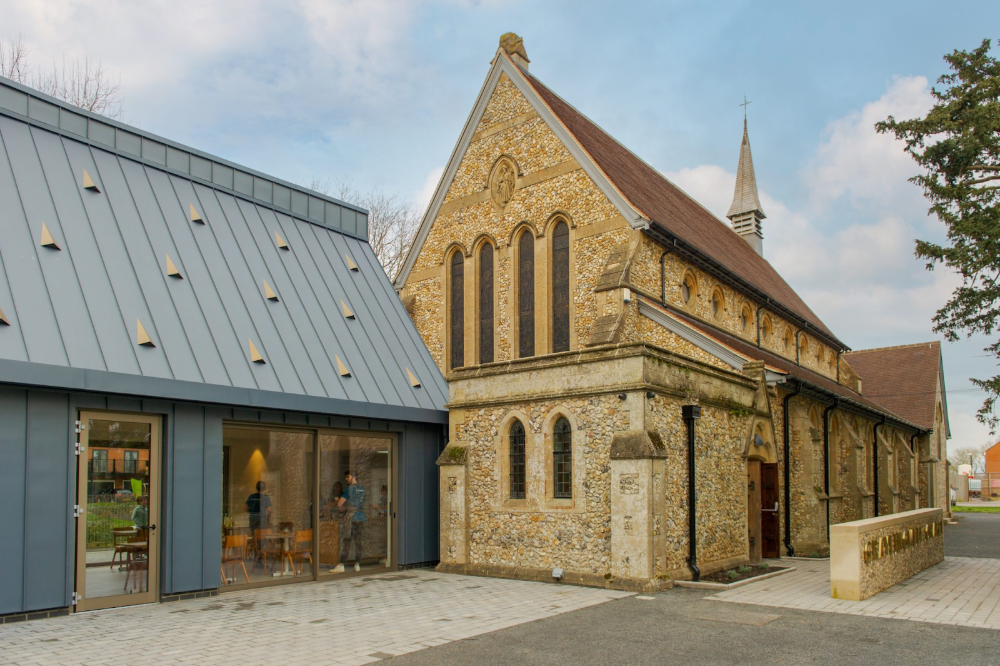
Image: Eagle House © Jonny Thompson Photography
-
which manages community buildings, but we have also set up trading subsidiaries and a Community Benefit Society (CBS) for specific ventures like our bike project.” — Clare de Bathe, advisor to Chichester CDT and CEO from 2012-2025
A ‘Community Development Trust’ itself is not a legal structure but is a model with a purpose. It’s common among long-term, place-based community organisations.
An initial decision framework
There’s no perfect structure. Each one solves different problems.
Name what matters most now
Note what might matter as you grow
Be open to multiple entities over time (a ‘governance stack’)
Trade-offs are to be expected; for instance between speed of establishment, charitable status and risk.
So, to get unstuck, it helps to list your priorities:
Is it speed and ease of setup? Or corporate tax exemption? Or business rates relief (which can make a big difference if you’re taking on an empty building that isn’t immediately usable)?
If you’re not yet clear on what the organisation will become, flexibility could be your top priority. Some governance decisions made early on can’t be reversed, but others allow some degree of change to your legal structure (see below).
Understanding the common legal structures
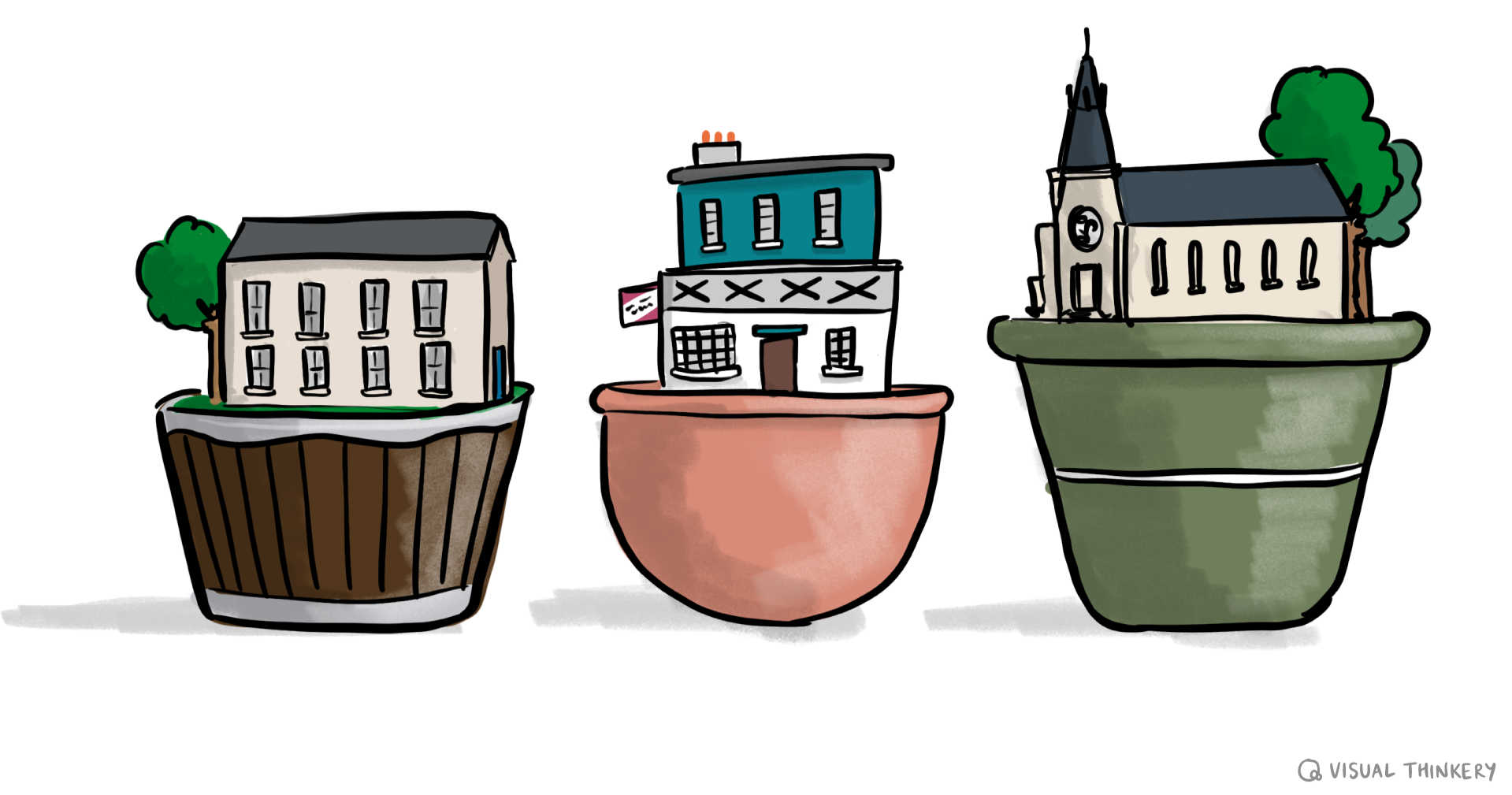
This is a starting point; please always seek professional advice for your specific case. Further reading: Plunkett UK’s resource on ‘Legal Structures’
-
Key features of a Community Interest Company (CIC):
Must satisfy the Community Interest Test, i.e. a reasonable person would consider that the CIC’s activities are or will be carried on for the benefit of the community.
Asset locked
Can trade freely
Can have a large or small membership
Can be company limited by guarantee or by shares
There are six forms of CICs (and not all of them are wholly non-profit), depending on:
membership size and structure
full asset lock or not
distribution of profits and surplus.
A CIC cannot be a charity
A CIC limited by guarantee cannot convert to a CIC limited by shares or vice versa
A CIC limited by guarantee is sometimes able to convert to a CIO or charitable CLG, but not to a CIC limited by shares
A CIC limited by shares can sometimes convert to a CIO but not to a charitable CLG or to a CIC limited by guarantee.
Not automatically eligible for the 80% business rates relief applicable to a charity. Instead, relief is at the discretion of local authority based on local policy
Good for: trading; agility; speed and simplicity of set-up; membership, which can be attractive to funders; compensating board members.
Trade-offs: unable to access to grants specifically for charitable organisations; no guaranteed business rates relief.
-
Key features of a Community Benefit Society (CBS):
A type of Registered Society
For community benefit (not for private gain)
Democratic: one-member-one-vote
Can run community share offers (must register with FCA)
Is mostly not-for-profit; can pay interest on shares (within limits)
Can be a charity (Charitable CBS) if it meets the tests; recognition is via HMRC rather than Charity Commission (as of December 2025) but is still subject to the jurisdiction of the Charity Commission. See the ‘CIO’ description below for more about being a charity
Asset lock (preventing assets from being used for private gain) is optional
A charitable CBS has similar (but slightly less) access to grant funding access than registered charity
If a charity, then eligible for 80% business rates relief; otherwise, relief is at the discretion of local authority based on local policy
Good for: flexibility on trading (unless charity); community ownership; Community Land Trusts (CLTs); share offers, democratic membership; simplicity of set-up (but slower and more regulated if charitable CBS).
Trade-offs: Less understood; no automatic business rates relief for CBS (unless charity); limited grant funding access if non-charitable; lack of flexibility to convert to a different structure.
-
Key features of a company limited by guarantee (CLG):
Usually (but not necessarily) not-for-profit and asset locked
Can be a registered charity (as long as it is not a CIC) if it meets the tests (in fact, legally must register as charity with Charity Commission if it meets the tests and has more than £5,000 annual income). See ‘CIO’ below for more about being a charity
Flexible (if not charitable) on activities and trading
Good for: social enterprises; governance stacks; limited liability; business rates relief (if charity); access to grant funding (wider if charity); flexibility (register as a charity, or convert to a CBS or co-op – though this brings complexity).
Trade-offs: slower recognition; more regulation (if charitable); high street bank lenders can sometimes be wary, because there’s no shareholding or equity (just a guarantee, e.g. £1 per member).
A company limited by shares (CLS) is an alternative, but this is uncommon for community asset development and is almost never charitable or not-profit. A few social funders/investors will still invest in a CLS if they have an asset lock (preventing dividends from being distributed to private shareholders).
-
Key features of a co-operative society:
Formed for member benefit (those who purchase shares) – not explicitly for wider community benefit or wider beneficiaries
Can run community share offers
Cannot be a charity (due to member benefit, not public benefit), apart from in very specific circumstances that don’t tend to be relevant for community assets
Democratic
Less common for community asset development - mostly due to limited access to funding and the need to follow cooperative principles (which is appropriate for some community asset developers’ goals, but not others)
Good for: worker/member co-ops; flexible (can convert to a company).
Trade-off: limited access to traditional sources of funding. -
Key features of a Charitable Incorporated Organisation (CIO):
This is a typical incorporated charity: a structure specifically designed for – and only available to – charities. Unlike unincorporated charities (e.g. trusts/associations), a CIO can hold property and sign contracts in its own name.
Not a company, so no requirement to list or register with Companies House (Charity Commission is the sole regulator, unlike charitable companies – see CLG above – which report to both).
Full asset lock
Every activity must serve charitable purpose (e.g. activities in the building)
Trading must further the purpose of the charity; but it’s possible to set up a trading subsidiary of the charity (which can donate profits to the charity, which avoids Corporation Tax, or reinvest in the subsidiary)
Greatest access to all traditional sources of funding (grants, donations), although mainstream lenders can sometimes be wary of charities (learning journey required)
Pros: simple governance; corporation tax exempt; clear charity model for fundraising; well understood; can boost credibility with some stakeholders.
Trade-offs: slower to set up and register (can take months, whereas many other entities can be incorporated in days or weeks); restricted ability to trade; no flexibility to convert to non-charitable model. -
Many community asset developers (CADs) end up with more than one organisation. Not because they love admin, but because different tools are good for different jobs.
Governance ‘stacks’ matter most when you’re planning a portfolio of buildings (as many CADs are). If your ambition is a cluster, a high street, or a neighbourhood-wide transformation, a single legal entity will rarely be able to hold all the risks, assets and funding streams.
When carefully approached, stacks can allow CADs to:
Hold different types of risk in different places
Use different structures to access different funding routes
Separate charitable activity from non-charitable trading
Bring in community shareholders
Protect anchor assets
Scale without overloading one entity
For example, Coin Street Community Builders is a family of organisations: a social enterprise (company limited by guarantee), housing co-operatives and a registered charity.
Hastings Commons has developed a governance ‘stack’ of four legally distinct organisations working together with an aligned purpose:
Hastings Commons Neighbourhood Ventures (HCNV) – a social enterprise property developer (company limited by shares with mission-aligned investors). It:
buys and finances difficult buildings
takes big development risks
renovates, leases and manages spaces
Hastings Commons Community Land Trust – a charitable Community Benefit Society (CBS), the long-term asset holder and membership body. It:
builds a large membership base
holds assets in perpetuity once they are “de-risked”
anchors democratic accountability
Hastings Commons Leisure & Learning – a registered charity delivering programming, community activities and learning.
Hastings Commons Living Rents – a subsidiary of HCNV, specialist housing body overseeing residential tenancies and housing standards, becoming a Registered Provider (a mini housing association).
Each has its own legal duties and board. But in practice, they operate as one ecosystem, with single joint quarterly board meeting, a shared strategy and largely shared policies, staff working as a single team, regardless of which entity employs them, and an MOU between the organisations for roles, principles and ways of working.
You can grow towards a stack over time, as needs arise – or you may find it’s not necessary even if you hold multiple assets (e.g. due to the trade-offs of complexity, risk and expense it can bring).
💡 A word of caution from Julian Lomas (Almond Tree Consulting) in a recent workshop with the pilot Local Property Partnerships:“A group or ‘federated’ structure with a mix of charitable and non-charitable entities can be essential if some charitable status is needed, but some activities aren’t charitable. You might even need multiple trading entities to isolate risks from each other.
Note, though, that the more complex this becomes, the higher the costs of admin, regulation and potentially legal or consultancy advice; it might overall be less efficient and appear less transparent to some funders.
So it’s really important to get tailored advice on whether this is the necessary set-up for your context, purpose and community at this moment in time – and to ensure you structure the relationships between entities properly.”
-
💡 A note from Julian Lomas (Almond Tree Consulting) in a recent workshop with the pilot Local Property Partnerships:
“It’s because most of them are themselves charities, and this is the easiest way to ensure their funding goes to charitable purposes — but there are various funder organisations, like Architectural Heritage Fund, with more sophisticated and flexible approaches. They will still have careful guardrails in place to ensure funds are protected from being used for private gain.
Whatever your governance structure, many funders need to see a “track record”; if you’re a new entity, you could overcome this by securing high quality trustees or partnering with a more established organisation who meets their criteria for track record.” -
💡 A tip from Julian Lomas (Almond Tree Consulting) in a recent workshop with the pilot Local Property Partnerships:
“There are very tightly defined – and often complex – criteria that determine whether your organisation can be a charity or not.
If you’re exploring the charity route, it’s so important to do your research and check whether your purposes and activities absolutely and exclusively align with charitable purposes and public benefit requirements in the Charities Acts.
For example, if you’re preserving a heritage building, for that preservation to be charitable and fit the purpose ‘The advancement of the arts, culture, heritage science’, the building has got to have sufficient merit architecturally or historically to be educational, there has to be sufficient public access to the building, and it must usually be used for charitable purposes (not primarily to carry out a business).
Promoting the arts is only charitable if performances are for educational purposes, not just entertainment, and private benefits to artists are properly managed.
Things like how much you pay to buy or lease a building compared to market rate, or how much you invest in its value through renovations, may impact the ‘public benefit’ test: if there is significant private benefit to the owner or former owner, that needs to be demonstrably ‘incidental’ to the public benefit and managed properly.
This is where tailored advice is usually essential.”
Models for governance that aren’t legal structures
These aren’t legal entities themselves, but can have legally incorporated elements within or alongside them.
Explore some powerful models used by many community asset developers to help orient a group’s purpose and principles:
-
Local Property Partnerships are a tried-and-tested process to unlock town centre buildings for amazing ideas.
Each Partnership is made up of a local council, community leaders and asset owners. They work together to transform town centres for long-term local benefit.
While sharing a purpose and a style of gathering that’s rooted in trust and relationships, different Local Property Partnerships take different structures, e.g.:
Bedminster Works CIC, made up of community leaders, asset owners and Bristol City Council;
The ‘Stottie Power’ steering group, bringing together local residents, social enterprises, a Byker councillor, an economic geographer, and members of Newcastle City Council and North East Combined Authority;
The ‘Collective’ in Darnall Ward (convened by Brightbox) of local people and business owners with a long-term focus on land rights, who will together decide the next steps of the partnership.
The Steering Group of the Wandsworth Town Property Partnership, with representatives from Wandsworth Council, Meanwhile Space, community organisers, socially-trading organisations, asset owners and local residents.
While convening these, the local leaders are building wider partnerships with residents and community organisations, and collaborating with groups from artists to agents to academics.
-
A Community Land Trust (CLT) is defined in law (Housing and Regeneration Act 2008) by its purpose and principles, not by legal structure.
A CLT must:
Be set up to further the social, economic and environmental interests of a local community
Hold land/asset in perpetuity for community benefit
Allow members to control it through a democratic structure (usually one-member-one-vote)
A CLT must choose an appropriate legal form to incorporate as, allowing for key features like asset lock and membership.
For example, Stokes Croft Land Trust in Bristol is a Community Benefit Society (CBS).
-
A long-term, place-based community organisation
Focused on regeneration, community development, local ownership and stewardship of assets
Often set up to hold and manage multiple assets (buildings, land, community enterprises)
Democratic, accountable to the local community
Designed to be a “forever” anchor for local benefit
A common model among community asset developers seeking neighbourhood-wide change
For example, Chichester Community Development Trust is a charitable company limited by guarantee that manages community buildings and land and has also set up trading subsidiaries and a CBS for specific ventures.
-
Heritage Development Trusts (HDTs) are a complementary model to CDTs, focused on the acquisition, restoration and retrofitting of heritage buildings of value to their community.
Organisations can be social enterprises or charities of different forms.
Architectural Heritage Fund has had success in proving this model in 7 places. Having secured and delivered a £15m DCMS-funded programme, they’ve rolled out the second £5m round with the National Lottery Heritage Fund in another 12 places.
Making membership matter

Images by Visual Thinkery © Platform Places
If you go down the route of a CLT, CBS or co-op, membership is central.
Bob Thust shares some practical lessons from Hastings Commons CLT, to combine representation, responsibility and real engagement:
Low barrier to join – membership costs £1, to make it as accessible as possible and grow a large base
Active engagement – newsletters, members’ events, public meetings, and proactive outreach in different parts of the town
Board drawn from membership – but with some checks and balances
Their board approach includes things like:
Recruiting from the membership, but allowing the existing board and exec to recommend a balanced slate to members (for skills, lived experience and diversity)
Requiring prospective trustees to attend meetings as observers before full appointment, with a confirmation vote from the existing board and the membership
Using members’ meetings to discuss knotty issues (e.g. who can hire venues, how to handle controversial bookings) and inform board decisions
When designing membership, ask: Which decisions are members’ decisions vs board/staff decisions? (Go back to the 5S and power–risk checks)
Part 3
Getting help and resourcing your governance
Designing governance is time-consuming, complex and often expensive. Many groups rely on a mix of pro-bono help, patient funding, and peer support.
Things that can help:
Funded governance support – Some community asset funding programmes include funding or other support for early-stage governance consultancy (e.g. Architectural Heritage Fund, National Lottery Community Fund, some local authority programmes, Plunkett UK). Read more in our guide to fundraising for community assets.
Case studies – Find stories of inspiration and interviews with experienced community asset developers (CADs), follow pilot programme learnings, and join support programmes for emerging CADs.
Governance mentors and peers – practitioners who have “been in the trenches”, including friends of Platform Places, Footwork and Mycelial Network (our small team can offer a limited amount of ‘matchmaking’ for peer mentorship via our newsletter and networks; get in touch).
Recommended experts:
Bob Thust (Finance, Investment & Operations Lead at Hastings Commons, and Partner at PG Collective). Reach out or join one of PG Collective’s free online lunchtime sessions.
Julian Lomas (Almond Tree Consulting Limited). Reach out.
Thank you to both Bob and Julian for contributions to this resource.
Revisiting and evolving
Governance isn’t “set and forget”. The structure you set up to secure your first meanwhile lease, for example, may not be right once you’re holding multiple assets or managing housing.
Bob suggests building in governance review moments, especially when:
You’re about to take on your first permanent asset
You’re shifting from one building to multiple buildings
You’re forming a new partnership, such as a Local Property Partnership or joint venture
Your scale changes (e.g. new staff team, bigger budgets, new funders)
You hit a crisis or major conflict that exposes governance gaps
Simple practices that help:
Run your 5S + stakeholder mapping exercise again
Redo the power vs risk check on big decisions
Sense-check whether your current entities are still the right tools (or whether you need to add/split/retire one)
Make space in the board and membership calendar for “how we’re governed” conversations, not just operations and projects
At whatever stage, your goal is to match governance to your own context, your community and your ambitions — and to remember that it’s not just about compliance; it’s about setting up the most appropriate ecosystem with your stakeholders and community, to shift who owns and stewards local spaces, for local transformation.
See more resources in our Community Assets Toolkit
Do you have a governance story you’d like us to spotlight — or a tip to share?